
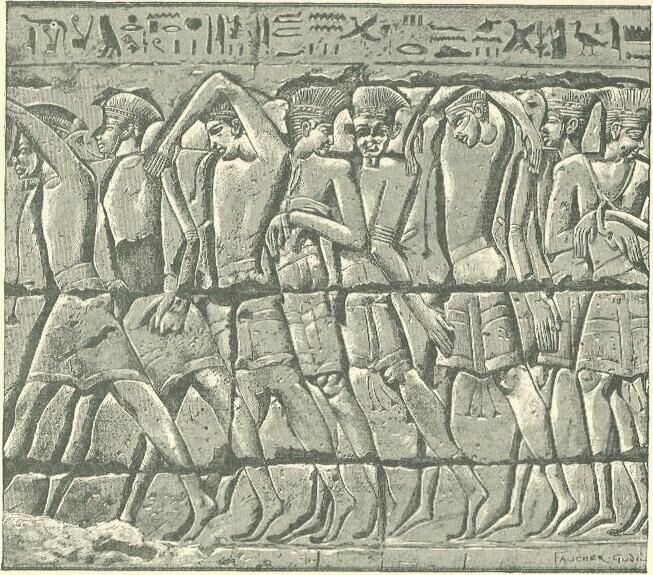
 In reading through Genesis recently, I became puzzled by the references to the “Philistines” in the patriarchal age. Genesis 21:34 says, “And Abraham sojourned in the Philistines’ land many days.” But wait, didn’t the Philistines first come into the land of Israel during the time of the Judges? That’s what the archaeological evidence shows. And it fits with Shamgar’s early encounter with them (Judges 3) and the eventual battles during the time of Samuel when they grew to full strength. So, are the Genesis references a historical problem? This is where the Septuagint, the Greek translation of the Old Testament, can help us out. While only one word for “Philistines” was used in the Hebrew, the ancient Jewish translators (300 BC) used two different Greek words in the Septuagint…an important clue that these were actually different people groups. Indeed Rabbinic sources consistently maintained that that the Philistines of Judges and Samuel’s time were distinct from the Philistines in Genesis. The later Philistines were said to be a conquering “Sea People,” who launched land and sea attacks on Syria, Palestine, and Egypt. Egyptian relief artwork (above) at the Medinet Habu complex vividly shows Pharoah’s victory over these mysterious “Sea People.” Exodus 23:31 also mentions the “Sea of the Philistines.” This may mean that it was already dominated by their boats, though they hadn’t invaded yet. Eventually these “Sea People” did establish a foothold along the coast of Israel and became a formidable adversary to God’s people. We’ll explore this topic further next month!
The Philistine Puzzle – Part 1

