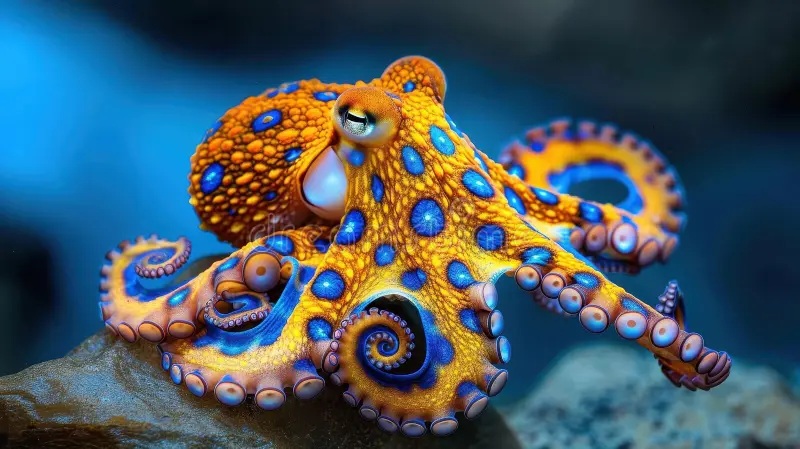
 This month we continue our mini-series focusing upon the most lethal creatures on the planet. Consider the blue-ringed octopus. This tiny cephalopod only grows to a few inches in length, but it can be very dangerous. The octopus’ venom contains a powerful neurotoxin called tetrodotoxin, which is 1,200 times more toxic than cyanide. There is no known antidote. Blue-ringed octopuses spend most of their time hiding in small crevices, displaying a camouflage pattern. There they lie in ambush of fish and small crustaceans. It will pounce on a crab, pulling the prey towards the horny beak. The octopus’ beak then pierces through the crab’s exoskeleton, releasing the venom that paralyzes the crab’s muscles. Blue-ringed octopuses might seem docile and harmless to a child exploring a shallow reef in Australia. But if the octopus becomes frightened, it will quickly change color, becoming bright yellow and displaying about 60 rings flashing a bright iridescent blue! Despite its small size, one blue-ringed octopus carries enough venom to kill 26 adult humans within minutes. Their bites are tiny and often painless, with many victims not realizing they have been poisoned. The venom can result in nausea, respiratory arrest, heart failure, and sometimes total paralysis. Death is usually caused by suffocation. Think of all the complicated biological systems in this little octopus: poison concentration, venom storage, and excretion into a victim. All the while, the octopus is largely immune to this venom. What an amazing design!

Earth’s Most Venomous Animals – Part 2

